Ourika Valley Morocco 2026: 9 Amazing Things to Do Near Marrakech
The scenery begins to change less than two hours after you leave the traffic, rooftops, and warm red walls of Marrakech.
The road follows a river into the foothills of the High Atlas. Walnut trees and orchards appear beside the water. Earth-colored Amazigh villages cling to the slopes, snow may still be visible on the higher mountains in cooler months, and roadside cafés replace the noise of the city with the sound of rushing water.
This is Ourika Valley, one of the easiest places to experience Morocco’s mountain landscapes without committing to a multi-day expedition.
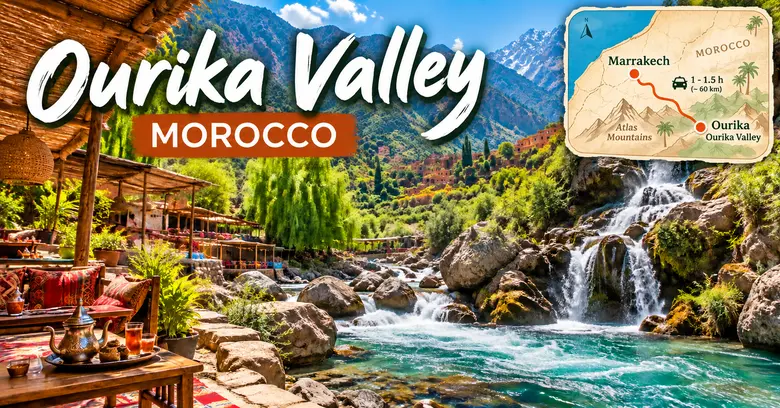
The valley begins roughly 30 kilometers south of Marrakech and continues toward Setti Fatma, the mountain village known for its series of waterfalls. Morocco’s tourism office describes Ourika as a fertile High Atlas valley filled with fruit and nut trees, traditional villages, and mountain scenery.
Whether you have one free day in Marrakech or you are building a longer Atlas Mountains itinerary, this Ourika Valley Morocco guide covers the waterfalls, villages, food, photography spots, transport, seasons, and practical details worth knowing before you go.
Ourika Valley at a Glance
| Travel Detail | What to Know |
|---|---|
| Location | High Atlas foothills south of Marrakech |
| Best known for | Waterfalls, river scenery, Amazigh villages |
| Main destination | Setti Fatma |
| Travel time | Around 1 to 1.5 hours from Marrakech depending on destination and traffic |
| Best for | Nature, hiking, photography, food, day trips |
| Best period | Spring and early summer for greener scenery |
| Ideal duration | Full day |
| Suitable for | Couples, families, solo travelers, photographers, digital nomads |
1. Why Visit Ourika Valley from Marrakech?
Marrakech is intense in the best possible way.
Its markets, traffic, cafés, palaces, colors, and constant movement can fill several days. Ourika offers the opposite experience.
Here, the attraction is space.
You follow the river through mountain villages, sit beside flowing water for lunch, walk beneath walnut trees, and gradually watch the High Atlas rise around you.
The Moroccan National Tourist Office highlights Ourika as one of the country’s verdant valleys, with traditional hillside villages and fertile landscapes surprisingly close to Marrakech.
Ourika works particularly well if you want to experience the Atlas Mountains but do not have enough time for a longer stay in Imlil or Jebel Toubkal National Park.
2. Where Is Ourika Valley?
The Ourika Valley is south of Marrakech, extending into the foothills of the High Atlas.
Official Moroccan tourism material places the beginning of the valley around 30 kilometers from Marrakech. The road continues deeper into the mountains until reaching Setti Fatma, the best-known village for visitors.
2.1 Marrakech to Ourika Valley
The journey usually takes around one to one and a half hours, depending on where you stop, traffic, and road conditions. Rough Guides similarly describes the valley as an easy day trip from Marrakech.
As you leave the city, the landscape changes gradually rather than suddenly.
Flat plains become hills.
Hills become mountains.
Small villages appear beside the river.
That transition is part of the trip.
2.2 Setti Fatma
Setti Fatma sits deeper in the valley and is the usual final destination for day trips.
The village is surrounded by mountain scenery, riverside restaurants, small shops, and access to the famous seven waterfalls. Official tourism information confirms that the road reaches Setti Fatma before visitors continue on foot toward the cascades.
3. Visit the Setti Fatma Waterfalls
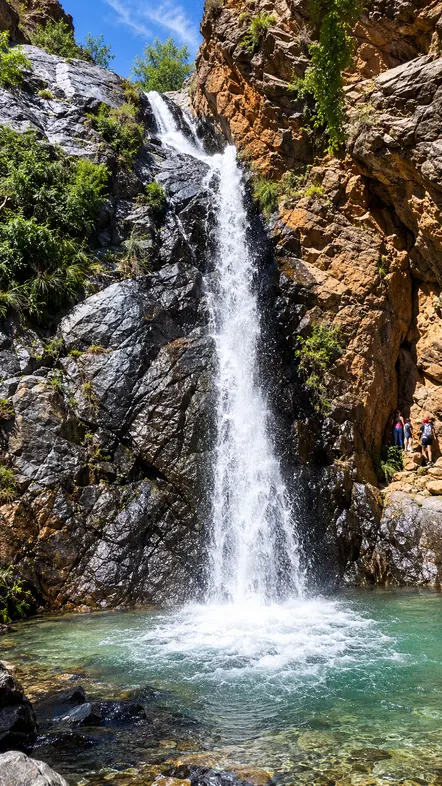

The waterfalls are the best known natural attraction in Ourika Valley.
From Setti Fatma, walking trails rise above the village toward a series of cascades flowing through rocky mountain terrain.
The Moroccan National Tourist Office identifies seven waterfalls above the village.
3.1 Do You Need to See All Seven?
Not necessarily.
For many travelers, enjoying the lower falls, mountain views, and village atmosphere is enough.
The route becomes more demanding beyond the easier sections, and Rough Guides notes that reaching the higher waterfalls involves more scrambling.
Wear shoes with good grip and consider a qualified local guide if you want to continue farther.
There is no prize for reaching every cascade.
The point is to enjoy the landscape safely.
4. Explore the Amazigh Villages of Ourika
The valley is not simply a nature attraction.
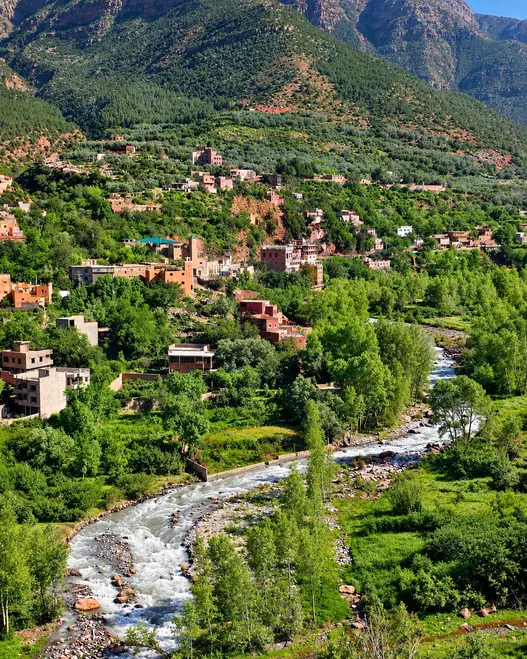

It is home to established Amazigh communities, agricultural land, houses, schools, cafés, and villages that existed long before tourism became important.
Traditional earth-toned buildings blend naturally into the slopes, while terraced cultivation reveals how communities have adapted to mountain geography.
Visiting with respect makes the experience much more meaningful.
4.1 Travel Respectfully
Remember that these are living communities.
Ask before photographing people.
Avoid treating private homes as tourist exhibits.
Support locally operated cafés, guides, cooperatives, and small businesses when possible.
Amazigh culture makes Ourika feel different from Marrakech, but you should experience it through respectful interaction rather than staged expectations.
5. Have Lunch Beside the Ourika River
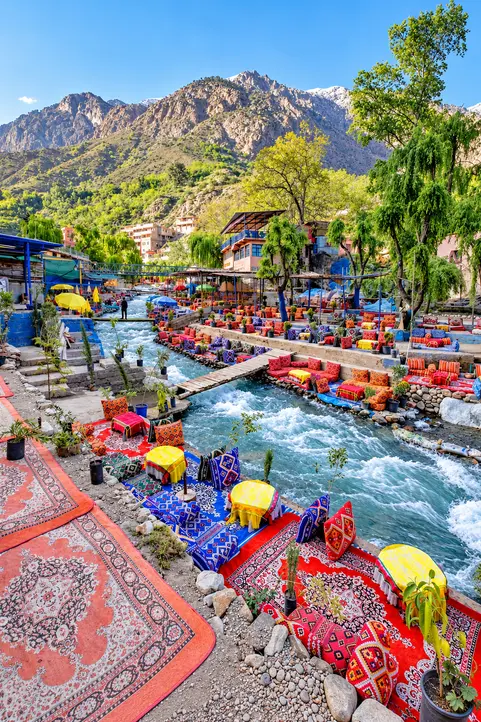

One of the simplest pleasures in the valley is also one of the most memorable.
Stop for lunch beside the river.
Many restaurants and cafés have tables or seating close to the water, creating a setting that feels especially refreshing after Marrakech.
Typical choices may include:
• Tagine
• Couscous
• Moroccan salads
• Grilled dishes
• Fresh bread
• Mint tea
Riverside dining is also one reason Ourika works particularly well as a relaxed day trip.
You do not need to spend every hour sightseeing.
Give yourself time to sit.
6. Discover Gardens and Local Products
Ourika is also known for agriculture.
Official tourism material highlights several gardens in and around the valley, including a saffron garden near Tnine Ourika and bioaromatic gardens cultivating dozens of varieties of medicinal and aromatic plants.
Depending on the season and current opening arrangements, the broader valley can introduce travelers to products such as
• Saffron
• Aromatic herbs
• Walnuts
• Local produce
• Traditional teas
• Regional crafts
These stops offer an alternative for travelers who want more than the Setti Fatma waterfalls.
7. Visit Tnine Ourika and the Local Market
If your schedule lines up, Tnine Ourika can add another layer to the trip.
Rough Guides notes that Monday is market day in the area, when people from nearby communities gather to trade goods. Rough Guides
A local market offers a very different experience from the souks of central Marrakech.
This is less about souvenirs and more about everyday regional life.
If you visit, keep your camera secondary to the experience. Markets are workplaces first.
8. Photograph the High Atlas Landscape
Ourika Valley is particularly rewarding for travel photography because several types of landscape come together in a relatively small area.
You have the river, waterfalls, terraced slopes, villages, orchards, bridges, rocky peaks, and changing mountain light.
8.1 Best Photography Subjects
Look for:
• The Ourika River winding through the valley
• Earth-toned villages against green slopes
• Waterfalls framed by rock
• Traditional architecture
• Walnut and fruit trees
• Mountain roads
• Riverside cafés
• High Atlas peaks in the distance
Early morning generally offers softer light and fewer visitors around popular areas.
Spring adds more greenery and seasonal color.
If you photograph people, always ask permission first.
9. Best Time to Visit Ourika Valley
You can visit Ourika throughout much of the year, but each season feels different.
9.1 Spring: Best for Green Landscapes
Spring is one of the strongest periods to visit.
The valley is greener, wildflowers and fruit blossoms may appear, and water flow can be more impressive after wetter months.
Both Rough Guides and Lonely Planet highlight spring as an especially attractive period for Ourika. Rough Guides
9.2 Early Summer: Best for Escaping Marrakech Heat
As Marrakech becomes hotter, the mountains provide a refreshing change.
Riverside cafés and waterfalls are especially appealing during warmer days.
9.3 Autumn: Good for Walking
Autumn can offer comfortable temperatures and fewer peak summer visitors.
The landscape may be less green than spring, but the valley remains attractive.
9.4 Winter: Mountain Atmosphere
Winter brings cooler conditions, particularly as you travel deeper into the mountains.
Higher Atlas peaks may carry snow, creating dramatic scenery.
Check the weather and road conditions before leaving Marrakech.
10. A Simple One-Day Ourika Valley Itinerary
You do not need an overloaded schedule.
A relaxed day works better.
Morning
Leave Marrakech early and travel south toward the High Atlas.
Stop for scenery, villages, or a local garden, depending on your interests.
Late Morning
Continue to Setti Fatma.
Walk through the village and explore an appropriate section of the waterfall trail.
Lunch
Choose a riverside restaurant and slow down over a tagine or another Moroccan meal.
Afternoon
Explore more of the valley, stop for photography or tea, and return toward Marrakech before evening.
The goal should be to experience the valley, not race through a checklist.
11. How to Get to Ourika Valley from Marrakech
There are several practical options.
11.1 Organized Day Tour
This is the simplest choice if you would rather not arrange transport yourself.
Many trips combine Setti Fatma with village stops, lunch, and occasionally a local guide.
Check exactly what is included before booking.
11.2 Private Driver or Taxi
A private transfer gives you more control over your schedule.
This is particularly useful if photography or slow travel is important to you.
Agree on the price and return arrangement before departure.
11.3 Independent Public Transport
Shared transport options exist, although they provide less flexibility than having your own driver.
Lonely Planet notes bus and grand taxi connections from Marrakech toward Ourika, though schedules and fares can change, so confirm locally before traveling. Lonely Planet
12. Ourika Valley for Digital Nomads and Slow Travelers
Ourika is usually presented as a day trip, but travelers staying longer in Morocco can approach it differently.
If you are working remotely in Marrakech, the valley makes an excellent break from screens, coworking spaces, and cafés.
Instead of trying to work from the mountains, use the day to disconnect.
Walk.
Have lunch beside the river.
Take photographs.
Return to Marrakech later.
For digital nomads who spend weeks or months in one destination, experiences like Ourika are one of the advantages of slow travel.
You can explore without squeezing everything into a three-day itinerary.
13. Practical Tips for Visiting Ourika Valley
Bring only what you actually need.
• Comfortable shoes with good grip
• Water
• Sun protection
• A light layer for changing mountain temperatures
• Some cash
• Smartphone or camera
• Small backpack
• Power bank if you will be out all day
Check the weather before leaving Marrakech.
Heavy rain in mountain valleys can change river conditions quickly, so avoid riverbanks and waterfall routes during unsafe weather and follow local advice.
Setti Fatma can also become busy, particularly on weekends and holidays.
For a quieter experience, go early.
14. Ourika Valley vs Imlil: Which Should You Visit?
Both are excellent escapes from Marrakech, but they suit different trips.
| Ourika Valley | Imlil |
|---|---|
| Easier day trip | Stronger trekking base |
| Waterfalls and rivers | High mountain trails |
| Riverside restaurants | Mountain guesthouses |
| Setti Fatma | Gateway to Toubkal |
| Good for families and casual visitors | Better for dedicated hikers |
| Easy nature escape | Deeper mountain experience |
Choose Ourika if you want a relaxed combination of water, food, villages, and scenery.
Choose Imlil if hiking and high mountain landscapes are your priority.
If you have enough time, visit both.
15. Frequently Asked Questions About Ourika Valley
Is Ourika Valley Worth Visiting from Marrakech?
Yes. Ourika Valley is one of the easiest ways to experience the High Atlas landscapes, rivers, Amazigh villages, and waterfalls without traveling far from Marrakech. It works particularly well as a full-day nature escape.
How Far Is Ourika Valley from Marrakech?
The beginning of the valley lies roughly 30 kilometers south of Marrakech, while Setti Fatma is farther into the mountains. Most travelers should allow around one to one and a half hours for the journey, depending on traffic and their destination.
What Is Ourika Valley Famous For?
Ourika is known for its green High Atlas scenery, Ourika River, Amazigh villages, riverside restaurants, and the seven waterfalls above Setti Fatma.
16. Useful Resources for Your Atlas Mountains Trip
Continue Exploring on Trending Morocco
• Jebel Toubkal National Park: 9 Things to Know Before You Go
• Hiking in the Atlas Mountains
• Ultimate Morocco Travel Guide 2026
Official Travel Resources
The Moroccan National Tourist Office provides official information about Ourika, Marrakech, and the surrounding Atlas Mountains. Visit Morocco.
Explore Marrakech and the Atlas Mountains with Visit Morocco.
17. Final Thoughts: Why Ourika Valley Belongs on Your Morocco Itinerary
Ourika Valley does not need a monumental landmark to justify the journey.
Its appeal is the transition itself.
You leave Marrakech behind, follow a mountain river, pass orchards and hillside villages, eat beside rushing water, and eventually reach the waterfalls of Setti Fatma.
It is close enough for a day trip but different enough to feel like another side of Morocco entirely.
If your itinerary has space for only one easy nature escape from Marrakech, Ourika Valley is one of the strongest choices.
Come for the waterfalls.
Stay long enough to notice everything around them.