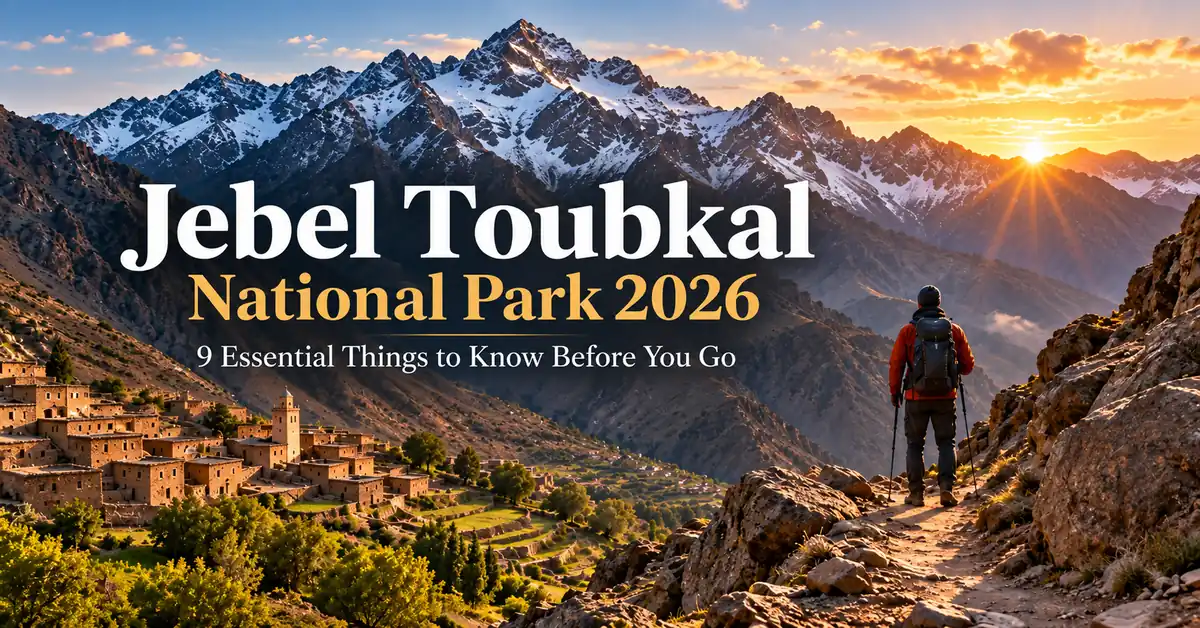
At first light, the High Atlas can feel impossibly far from Marrakech.
The traffic and terracotta walls disappear behind you, mountain roads climb into increasingly narrow valleys, and villages built into the slopes begin to replace the city skyline. By the time you reach Imlil, the landscape has changed completely.
Above it all rises Jebel Toubkal, the highest mountain in North Africa at 4,167 metres.
But Jebel Toubkal National Park is about much more than reaching a summit.
Amazigh villages, terraced valleys, high mountain scenery, local guesthouses and walking trails make this one of Morocco’s most rewarding destinations for travelers who want to experience the country beyond its medinas and coast.
Whether you are planning a day in Imlil, a mountain trek, a cultural stay in an Amazigh village or a longer Atlas Mountains hiking trip, this guide will help you understand what to expect and how to plan your visit responsibly.
Jebel Toubkal National Park at a Glance
| Planning Detail | What to Know |
|---|---|
| Region | High Atlas Mountains |
| Highest peak | Jebel Toubkal, 4,167 m |
| Main gateway | Imlil |
| Nearest major city | Marrakech |
| Best for | Hiking, landscapes, Amazigh culture, photography |
| Popular seasons | Spring and autumn |
| Summit experience | Usually planned over multiple days |
| Accommodation | Guesthouses, mountain refuges and village stays |
| Travel style | Adventure, slow travel, cultural immersion |
1. Why Visit Jebel Toubkal National Park?
Jebel Toubkal National Park sits in the central High Atlas, within reach of Marrakech but culturally and geographically far removed from the city.
The Moroccan National Tourist Office describes Toubkal National Park as a protected mountain environment between the N’Fiss and Ourika valleys. (Visit Morocco)
For travelers, its appeal comes from the combination of three things.
1.1 Mountain Scenery
The park brings together high peaks, valleys, rocky slopes and distant mountain passes.
You do not need to reach the summit to appreciate the landscape.
Even lower elevation walks around Imlil can reveal some of the High Atlas scenery that makes this region so distinctive.
1.2 Amazigh Culture
Villages are not simply stopping points on a trekking itinerary.
They are living communities with their own architecture, food, agriculture and traditions.
Traveling slowly gives you more time to understand the human side of the mountains.
1.3 Escape From Marrakech
One of the biggest attractions is the contrast.
You can leave one of Morocco’s busiest destinations and find yourself surrounded by mountain villages and walking trails within the same broader region.

2. Where Is Jebel Toubkal National Park?
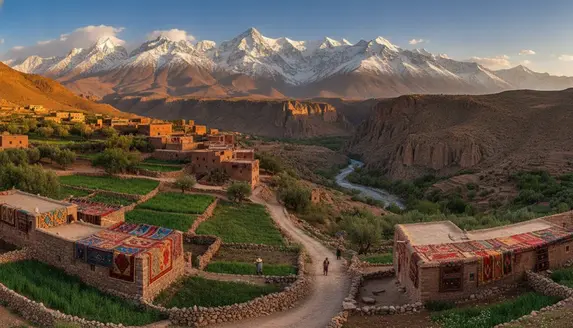
Jebel Toubkal lies in Morocco’s High Atlas Mountains, south of Marrakech.
The High Atlas stretches for hundreds of kilometres and includes the country’s highest elevations. Jebel Toubkal is its best known summit and the highest point in North Africa.

2.1 Imlil: The Main Gateway
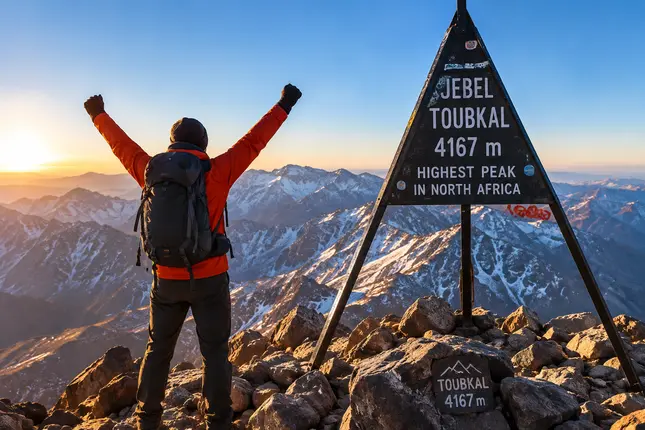
For most travelers, Imlil is the starting point.
The village serves as a base for accommodation, local guides, meals and mountain excursions.
Rather than rushing through it, consider spending at least one night.
The surrounding valley is worth exploring even if you have no intention of attempting a summit trek.
2.2 Reaching Imlil From Marrakech
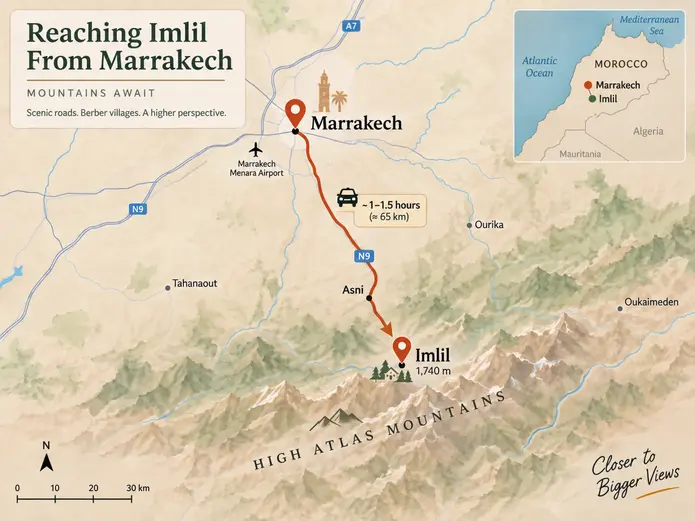

Most visitors approach the High Atlas from Marrakech by road.
Private transfers, taxis and organized excursions are commonly used to reach Imlil.
Travel times depend on traffic and road conditions, so avoid planning a demanding mountain day immediately after a late arrival.
3. Best Time to Visit Jebel Toubkal National Park
The mountains change dramatically with the seasons.
For general hiking and village exploration, spring and autumn are often the most comfortable periods.
3.1 Spring
Spring brings milder temperatures to many lower trails and greener valley scenery.
It is an attractive period for travelers who want to combine walking with photography and village stays.
3.2 Summer
Lower elevations can become hot during the day.
Higher areas remain cooler, but strong sun and altitude still deserve respect.
Early starts and sensible itineraries become particularly important.
3.3 Autumn
Autumn can provide another excellent window for hiking.
Temperatures begin to ease after summer, while the mountains often remain accessible for general trekking.
3.4 Winter
Winter changes the character of Toubkal considerably.
Snow and ice can turn what is a hiking route in warmer seasons into a mountaineering environment.
Travelers without appropriate winter mountain experience should not treat a winter summit attempt as an ordinary hike. Use qualified professional guidance and check current conditions locally.
4. Atlas Mountains Hiking Around Toubkal
The most famous objective is the summit, but Atlas Mountains hiking around Toubkal includes far more than one route.
4.1 Walks Around Imlil
Shorter walks through the valley can be a better introduction for travelers with limited time.
You still get mountain scenery, village life and the slower rhythm of the High Atlas without organizing a major ascent.
4.2 Village to Village Hiking
Walking between Amazigh communities adds cultural depth to the experience.
Terraced fields, traditional houses and valley landscapes turn the journey itself into the attraction.
4.3 The Toubkal Trek
The classic Mount Toubkal ascent begins from Imlil and is usually approached as a multi day experience rather than a quick excursion.
Official Moroccan tourism information describes the climb as typically taking around two to three days depending on the itinerary.
The altitude and changing mountain conditions are more important than technical ambition.
A sensible pace matters.
5. Guided Trekking or Independent Exploration?
You can enjoy the region without turning every walk into a guided expedition.
However, the more demanding the route becomes, the more valuable local expertise is.
5.1 When a Guide Makes Sense
A qualified local guide can help with:
• Current trail conditions
• Route planning
• Weather decisions
• Local logistics
• Cultural context
• Communication in villages
Official Moroccan tourism material also presents the Toubkal ascent as an experience undertaken with local guidance.
For summit attempts or unfamiliar high mountain terrain, check current access requirements in Imlil before starting.
5.2 When to Keep Things Simple
If your goal is simply to see the mountains, you do not need to build your visit around the summit.
A village stay plus a shorter guided walk can be far more enjoyable than forcing a major trek into a tight itinerary.
6. Amazigh Villages and Culture in the High Atlas
The High Atlas is not empty wilderness.
Its villages are central to the experience.
6.1 Traditional Architecture
Many mountain homes have historically used locally available materials such as stone and earth.
The buildings blend naturally into the slopes, giving villages a distinctive appearance that changes little from a distance even as daily life evolves.
6.2 Hospitality
Tea and food are an important part of Moroccan hospitality, and mountain guesthouses provide a particularly personal way to experience it.
Staying overnight gives you more time to appreciate life beyond the trekking trail.
6.3 Respect Local Communities
Villages are people’s homes.
Ask before photographing residents.
Dress appropriately for the setting.
Use local services when possible.
Avoid walking through agricultural land without permission.
A respectful traveler leaves more than money behind. Good interactions matter too.
7. Nature and Wildlife in Jebel Toubkal National Park
The park protects an important High Atlas ecosystem.
Vegetation changes noticeably with altitude, while mountain birds and other wildlife inhabit the valleys and rocky slopes.
Official tourism material highlights the park’s varied vegetation and mountain wildlife, including raptors and other native species.
7.1 Wildlife Watching
Do not plan the trip around guaranteed sightings.
Wild animals are unpredictable.
Instead:
• Keep your distance
• Stay quiet around wildlife
• Avoid feeding animals
• Remain on established paths
• Carry your rubbish out
The landscape itself is usually the highlight.
8. Where to Stay Near Jebel Toubkal
Accommodation ranges from simple mountain facilities to comfortable guesthouses around Imlil and neighboring villages.
8.1 Guesthouses in Imlil
For most visitors, this is the easiest option.
You remain close to cafés, local services and trekking access while still experiencing a mountain village atmosphere.
8.2 Village Gîtes and Guesthouses
Smaller village stays can offer a more intimate experience.
They are especially appealing to slow travelers who care as much about local culture as hiking.
8.3 Mountain Refuges
Mountain refuges primarily serve trekkers traveling farther into the mountains.
Expect simplicity rather than hotel style comfort.
| Accommodation | Best For | Main Advantage |
|---|---|---|
| Imlil guesthouse | First time visitors | Convenience |
| Village stay | Cultural travelers | Local atmosphere |
| Mountain refuge | Trekkers | Trail access |
| Comfortable lodge | Couples and slower trips | Rest and privacy |
9. What to Eat in the High Atlas
Mountain food feels particularly satisfying after a day outside.
Meals tend to be built around familiar Moroccan staples prepared with local ingredients.
9.1 Tagine
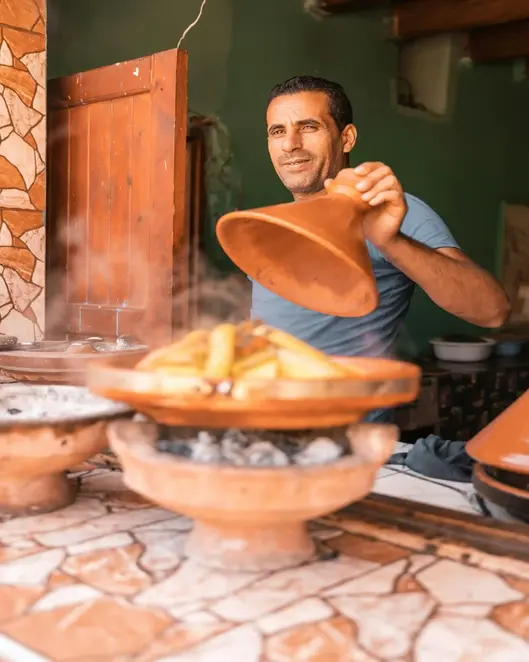

Slow cooked tagines are common in guesthouses and village restaurants.
Recipes vary according to what is available.
9.2 Couscous


Couscous remains one of Morocco’s most recognizable dishes and can become a shared meal rather than simply something ordered individually.
9.3 Harira


This warming soup can be especially welcome during cooler mountain evenings.
9.4 Moroccan Mint Tea


Tea is much more than a drink.
It accompanies conversations, arrivals, meals and moments of rest throughout Morocco.
| Food | Why Try It |
|---|---|
| Tagine | Slow cooked mountain comfort food |
| Couscous | Traditional shared meal |
| Harira | Warm and filling |
| Local bread | Served with many meals |
| Mint tea | Part of everyday hospitality |
10. Responsible Travel in the High Atlas
The mountains are beautiful partly because communities have lived alongside them for generations.
Travelers can help preserve that balance.
10.1 Support Local Businesses
Choose locally operated guesthouses, guides, restaurants and shops when practical.
10.2 Carry Your Waste Out
Do not leave packaging or disposable items on trails or around villages.
10.3 Stay on Established Paths
Shortcuts can damage vegetation and agricultural areas.
10.4 Use Water Thoughtfully
Water is an important resource in mountain communities.
Long showers and unnecessary consumption have a greater impact than travelers sometimes realize.
11. Jebel Toubkal for Digital Nomads and Slow Travelers
You do not have to be a serious trekker to enjoy the region.
Digital nomads and long stay travelers can use the High Atlas as a break from Morocco’s larger cities.
Spend a few nights in Imlil.
Work less.
Walk more.
Have lunch overlooking the valley.
Photograph the mountains in changing light.
Then return to Marrakech refreshed instead of trying to convert every mountain visit into a physical challenge.
Internet quality can vary between properties, so anyone planning to work should confirm connectivity before booking a longer stay.
12. Final Thoughts: Is Jebel Toubkal National Park Worth Visiting?
Absolutely, especially if you want to experience a side of Morocco that feels completely different from Marrakech, Fes or the coast.
The summit may be famous, but it should not overshadow everything around it.
Imlil, Amazigh villages, mountain food, valley walks and the landscape itself can easily justify the journey.
If reaching the top is your goal, treat the Toubkal trek as a serious mountain experience rather than another sightseeing activity.
If it is not, there is still plenty to discover.
Sometimes the best High Atlas experience is simply waking up in a quiet village, stepping outside and realizing how far the city suddenly feels.
13. Frequently Asked Questions
13.1 What Is the Best Time to Visit Jebel Toubkal National Park?
Spring and autumn are generally excellent for hiking and valley exploration because temperatures are usually more comfortable. Winter brings snow and more demanding mountain conditions, while summer can be hot at lower elevations.
13.2 How Long Does the Toubkal Trek Take?
Official Moroccan tourism information describes the classic ascent as generally taking around two to three days, starting from the Imlil area. Your itinerary should reflect your experience, conditions and acclimatization rather than rushing to match a fixed schedule.
13.3 Do I Need to Reach the Summit to Enjoy Toubkal National Park?
No. Imlil, valley walks, Amazigh villages, mountain viewpoints and shorter hikes make the park worthwhile even if you have no plans to attempt the summit.
Useful Resources for Planning Your High Atlas Trip
Continue Exploring on Trending Morocco
• Hiking in the Atlas Mountains for more trails, valleys and mountain destinations
• Rock Climbing in Todra Gorge 2026 for another side of Morocco’s adventure landscape
• Morocco Road Trip 2026: Epic 4×4 Routes & Essential Tips for connecting the High Atlas with southern Morocco
• Digital Nomad Wellness if you are combining remote work with longer stays and outdoor travel
Official External Resources
• Moroccan National Tourist Office: Marrakech and Toubkal Nature Guide Exploe Toubkal and the High Atlas
• Moroccan National Tourist Office: Trekking in Morocco Explore Morocco trekking destinations
• Moroccan National Tourist Office: Morocco’s Geography for background on the High Atlas and Jebel Toubkal. ExploreMorocco’s mountain geography