



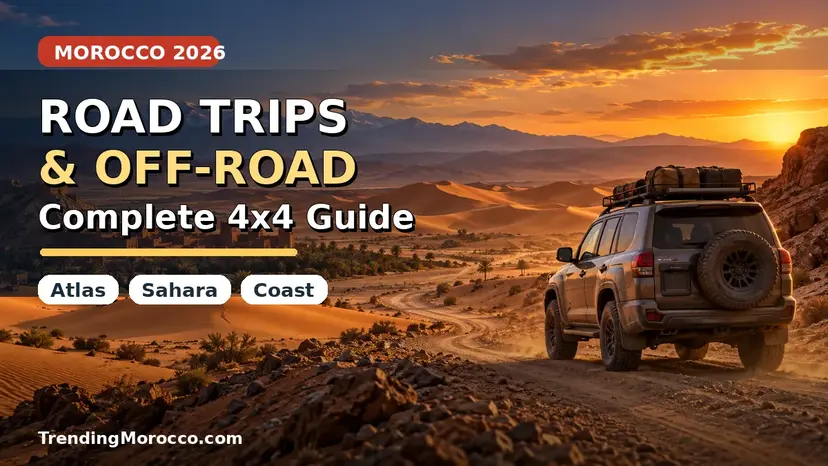
A Morocco Road Trip is one of the most rewarding ways to explore North Africa, combining mountain drives, coastal routes, and unforgettable desert adventures. From the Atlantic coast to the Atlas Mountains and the Sahara, Morocco offers travelers a rare mix of dramatic scenery, rich culture, and remote landscapes that are best discovered on the open road.
If you are planning a Morocco road trip 2026, good preparation matters. Distances can feel longer than they look on a map, road conditions can change quickly, and some remote areas have limited mobile coverage or services.
This guide brings together the essential planning tips, recommended routes, vehicle advice, safety basics, cultural etiquette, and budgeting points you need before starting a Moroccan driving adventure.
Before planning your full route, read our:[Ultimate Morocco Travel Guide 2026]
- If your itinerary includes remote areas, compare your [Morocco travel insurance 2026]
- For maps, bookings, and communication on the road, check our guide to the [best eSIM for Morocco].
- If you plan to add coastal stops, explore our guide to the [best beaches for adventure in Morocco].
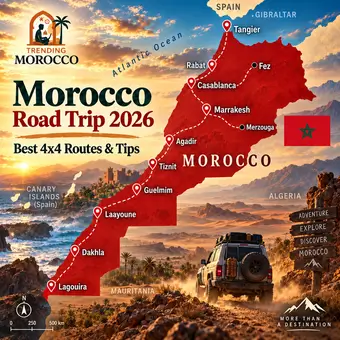
I) Important Preparations for Your Morocco Road Trip 2026
Any road trip in Morocco requires careful planning, especially if your itinerary includes mountains, desert tracks, or isolated villages. Before departure, prepare your documents, check your rental conditions, and understand what kind of terrain your route includes.
A strong plan helps you avoid delays and makes the trip smoother from the first day.
Vehicle Selection and Rental Conditions
A reliable 4×4 is essential for Morocco’s rougher terrain, especially around desert areas, mountain passes, and remote tracks. Travelers usually find more rental options in major cities such as Marrakech, Casablanca, Agadir, Tangier, and Fes.
Before signing the rental agreement, confirm the following:
- Valid driving license requirements
- Passport and deposit requirements
- Credit card conditions
- Roadside assistance terms
- Whether off-road driving is allowed
- Insurance limits for dirt roads, sand, and remote routes
Many rental policies do not cover damage caused by driving on unpaved roads or dunes. Read the agreement carefully and ask the rental company to explain any exclusions before you leave the city.
READ MORE:
Renting a Car in Morocco 2026: Cheap vs Reliable – The One That Saves You Money Will Surprise You
Moroccan Traffic Laws and Road Conditions
Driving in Morocco requires full attention, especially on highways, mountain roads, and rural routes. Respect speed limits, keep your rental papers with you, and carry your passport or ID when traveling between regions.
Police checkpoints are common and usually straightforward. Slow down, follow instructions, and keep documents easy to access.
Road conditions can change because of weather, roadworks, rockfall, or local traffic. On narrow roads, watch for pedestrians, animals, cyclists, buses, and slow-moving vehicles. Defensive driving is one of the most important habits for a safe Morocco road trip.
II) When to Go for Desert and Mountain Exploration
Choosing the right season can make a big difference. Spring and autumn are usually the most comfortable periods for long drives, mountain routes, and desert exploration.
Summer can be very hot inland, especially near the Sahara. Winter can bring snow and cold temperatures in the Atlas Mountains, which may affect high-altitude roads.
| Season | Mountain conditions | Desert suitability |
|---|---|---|
| Spring, March to May | Mild, green, and scenic | Excellent for desert exploration |
| Summer, June to August | Warm and accessible in some areas | Extreme heat, avoid midday travel |
| Autumn, September to November | Clear, cool, and comfortable | Ideal for longer expeditions |
| Winter, December to February | Snow and cold possible at altitude | Cool nights and pleasant days |
For most travelers, spring and autumn offer the best balance between comfort, scenery, and practical road conditions.
III) Atlas Mountains Circuit
The Atlas Mountains take a Moroccan road trip to another level. This region is the backbone of the country, with dramatic valleys, Berber villages, high passes, and roads that reward patient drivers with unforgettable views.
The terrain can be demanding, so it is better suited to confident drivers, well-maintained vehicles, and carefully planned itineraries.
Crossing the Tizi’N Test Pass
The Tizi’N Test Pass is one of Morocco’s classic mountain drives. It is known for steep climbs, narrow bends, and wide views over the surrounding valleys.
This route should be approached with caution. Check weather and road conditions before leaving, drive slowly, and avoid rushing the descent. The views are impressive, but safety should come before photography stops or tight schedules.
Cultural Stops in Berber Villages
The Atlas Mountains are not only about scenery. They are also home to Berber communities with long-standing traditions, local crafts, and rural ways of life.
When visiting villages, respect local customs. Dress modestly, ask permission before taking photos, and support small businesses when possible. Buying local products, eating in family-run places, or hiring a local guide helps keep money in the community.
IV) Sahara Desert Expedition Route
Morocco’s Sahara region is famous for silence, open horizons, dunes, rocky plains, and remote routes. It can be deeply rewarding, but it also requires preparation and respect for the environment.
For first-time visitors, the safest approach is to travel with a licensed local guide or join an organized desert excursion. Local knowledge is valuable because tracks, weather, and access conditions can change.
Erg Chebbi Dunes
Erg Chebbi, near Merzouga and Hassi Labied, is one of Morocco’s best-known desert areas. The dunes attract travelers interested in photography, camel rides, desert camps, and scenic 4×4 excursions.
Driving in sandy areas is not the same as driving on a normal road. If your route goes beyond paved access roads, confirm that your rental vehicle is suitable and that the rental company allows this type of use. A local driver or guide is strongly recommended for unfamiliar desert tracks.
Overnight Stays Around Merzouga
Spending a night near Merzouga is one of the most memorable parts of a Sahara itinerary. Accommodation ranges from simple desert camps to more comfortable tented stays with private facilities.
Choose camps that respect the desert environment and support local communities. Many camps offer dinner, music, sunrise views, and optional camel rides, making the experience accessible without needing to drive deep into remote areas yourself.
Essential Desert Equipment
The right equipment is important for safety, especially when driving outside towns or paved routes. The list below is a practical starting point for remote desert travel.
| Equipment item | Purpose | Priority |
|---|---|---|
| Tire pressure gauge | Check and adjust tire pressure for better sand traction | Critical |
| Recovery boards | Help a vehicle regain traction when stuck in sand | High |
| Portable air compressor | Reinflate tires after driving on sand | High |
| Satellite messenger | Emergency communication where mobile coverage is unavailable | Nice to have |
Even with good equipment, avoid driving alone in unfamiliar desert areas. The safest option is to use local expertise, especially if it is your first Sahara route.
V) Tangier to Essaouira Coastal Drives
Morocco’s Atlantic coast gives travelers a very different driving experience from the desert and mountains. The coastline offers cliffs, surf towns, seafood stops, fishing ports, medinas, and cooler ocean air.
This route is ideal if you want adventure without spending every day on remote tracks.
Scenic Atlantic Cliff Routes
The drive between northern Morocco and Essaouira can include beautiful Atlantic views, coastal villages, and quiet stretches where the road follows the ocean. It is a good choice for travelers who want a mix of scenery, food, and relaxed stops.
Some coastal roads include tight bends or exposed sections. Drive carefully, avoid stopping in unsafe places, and leave time for viewpoints instead of rushing between destinations.
Coastal Towns for Surfers and Food Lovers
Morocco’s Atlantic coast is especially popular with surfers, kitesurfers, photographers, and food lovers. Many towns offer fresh seafood and a slower rhythm than the big inland cities.
Useful stops include:
- Essaouira: Known for its historic medina, ramparts, port, seafood, and strong wind conditions.
- Taghazout: A popular surf village north of Agadir with Atlantic waves and a relaxed coastal atmosphere.
- Oualidia: Known for its calm lagoon, oysters, and slower pace.
Whether you are surfing, walking along the harbor, or stopping for grilled fish, the coast adds balance to a Morocco road trip.
VI) Best Road Trips & Off-Road in Morocco 2026
The best road trips and off-road routes in Morocco in 2026 combine scenery, culture, and careful planning. From paved mountain roads to dusty desert tracks, the country has routes for different comfort levels.
The following options are among the most memorable for travelers who want more than a simple city-to-city itinerary.
The Gorges Road of the Dades Valley
The Dades Valley is known for red cliffs, palm groves, rock formations, and dramatic bends. The hairpin road near Tissadrine is one of the most photographed driving spots in Morocco.
This area is suitable for travelers who want mountain scenery without going too far into remote wilderness. Drive slowly, stop only in safe areas, and allow time for viewpoints, short walks, and local guesthouses.
The Remote Tracks of the Anti-Atlas
The Anti-Atlas is ideal for travelers looking for quieter landscapes, volcanic scenery, and smaller Berber communities. Compared with the main tourist circuits, this region often feels more isolated and less crowded.
Because services can be limited, plan fuel stops, accommodation, and navigation before entering remote areas. A high-clearance vehicle is recommended for rougher tracks, and local guidance can make the route safer and more meaningful.
Key reminders:
- Navigation tip: Carry offline maps and avoid relying only on mobile signal.
- Terrain warning: Expect loose dirt, rocky sections, and steep climbs in some areas.
- Cultural etiquette: Ask permission before photographing people or private homes.
Ancient Caravan Trails of the Draa Valley
The Draa Valley is one of Morocco’s most atmospheric routes. It follows historic caravan landscapes, palm groves, kasbahs, riverbanks, and desert edges.
This route connects mountain scenery with Sahara landscapes, making it a strong choice for travelers who want history, photography, and varied terrain in one journey.
VII) Off-Road Safety and Navigation Basics
Remote travel in Morocco can be exciting, but safety must come first. Mobile service can disappear quickly outside towns, especially in mountain valleys, desert zones, and isolated tracks.
A safe road trip is not about taking unnecessary risks. It is about preparation, good judgment, and knowing when to turn back.
GPS Tools and Offline Mapping
Phone maps are useful, but they should not be your only navigation tool in remote areas. Download offline maps before leaving reliable Wi-Fi, save your accommodation location, and keep your route available without mobile data.
For deeper desert or mountain travel, consider a separate GPS device, a paper map, and a compass as backups. Batteries, heat, and weak signal can create problems, so redundancy matters.
Important reminder: In remote terrain, never rely on technology alone. Share your route with someone you trust, check conditions locally, and avoid isolated routes without support.
Emergency Gear and Rescue Equipment
Breakdowns and delays are possible on rough routes. A basic emergency kit can make a difficult situation easier to manage.
| Item category | Essential item | Primary function |
|---|---|---|
| Recovery | Recovery boards or sand ladders | Traction support on soft sand |
| Mechanical | High-lift jack or approved vehicle jack | Vehicle support during maintenance |
| Survival | Extra fuel and water | Extended range and basic emergency support |
| Navigation | Satellite messenger | Emergency communication outside mobile coverage |
Pack for delays, not only for the perfect version of your itinerary. Water, shade, first-aid supplies, and communication tools are especially important outside cities.
VIII) Remote Travel and Cultural Immersion
Off-grid travel in Morocco offers a different kind of experience. Away from large cities, you can see rural traditions, small villages, mountain agriculture, desert hospitality, and local crafts.
These encounters are often the most memorable part of a road trip when approached with respect.
Respect for Local Customs in the Countryside
Many rural Moroccan communities value modesty, privacy, and polite behavior. Dress respectfully, especially in villages and conservative areas. Covering shoulders and knees is a simple way to show respect.
Photography also needs care. Always ask before taking photos of people, homes, children, or private property. A friendly greeting, patience, and basic courtesy go a long way.
Supporting Local Economies in Off-Grid Areas
Remote travel can benefit local communities when visitors spend thoughtfully. Choose local guides, family-run guesthouses, village restaurants, and artisan shops when possible.
Buying directly from craftspeople, using local services, and eating in small businesses helps keep more money in the region. This makes your trip more meaningful while supporting the people who live along these routes.
IX) Vehicle Maintenance in Difficult Conditions
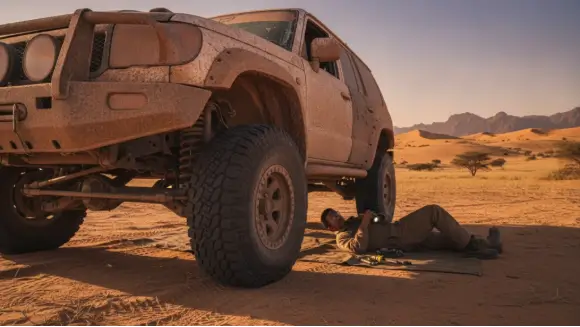
Morocco’s rough terrain can challenge even strong vehicles. Desert dust, heat, rocks, steep climbs, and long distances all place pressure on mechanical systems.
Simple checks before and during your trip can prevent small issues from becoming serious problems.
Sand and Rock Tire Pressure Management
Different terrain affects tire performance. Soft sand, rocky tracks, and paved roads all require different driving care. If you are using a rental vehicle, ask the rental company or local guide how the vehicle should be handled on your planned route.
Carry a tire pressure gauge and portable compressor if your itinerary includes remote tracks. After any difficult section, check your tires for visible damage before continuing.
Engine Cooling and Dust Protection
Heat and dust are two major challenges for vehicles in Morocco. Before leaving a city or major town, check coolant levels, engine temperature behavior, and the general condition of the vehicle.
Dust can reduce engine performance and cause problems on long routes. If you are driving in dusty areas, inspect the air filter regularly or ask a mechanic to check it before remote sections.
Practical checks include:
- Check air filters during dusty travel days.
- Inspect oil, coolant, and other fluid levels before long drives.
- Keep the radiator area clean from visible debris.
- Check belts and tires before major travel days.
These simple habits help keep the vehicle reliable and reduce the chance of delays in isolated areas.
X) Best 4×4 Vehicles for Moroccan Terrain
Choosing the right 4×4 is one of the most important decisions for a Moroccan road trip. The best vehicle depends on your route, comfort level, group size, luggage, and whether you will stay mainly on paved roads or include remote tracks.
Toyota Land Cruiser for Sahara Routes
The Toyota Land Cruiser is a common choice for desert routes because of its durability and reputation in remote conditions. Many local operators use it for Sahara excursions and long-distance routes.
It is a strong option for travelers who want space, reliability, and confidence on rougher roads.
Mitsubishi Pajero for Mountain Passes
The Mitsubishi Pajero is often appreciated for its balance of comfort and capability. It can be suitable for mountain roads, valleys, and mixed itineraries where travelers want control without sacrificing too much comfort.
It is a practical choice for road trips that combine cities, mountain passes, and rural routes.
Land Rover Defender for Rugged Trails
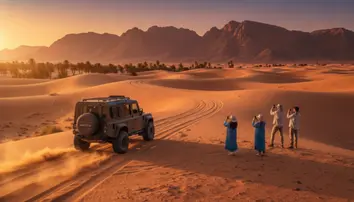
The Land Rover Defender is associated with rugged terrain and remote travel. It can be useful for more demanding routes when properly maintained and supported.
For rental trips, condition matters more than brand name. Always inspect tires, brakes, lights, fluids, and spare equipment before accepting the vehicle.
XI) Itinerary Planning for Different Landscapes
A successful Morocco road trip depends on rhythm. The country rewards slow travel, and the best moments often happen when you leave space for viewpoints, markets, cafés, short walks, and unexpected stops.
Avoid planning every day too tightly. Mountain roads and desert routes can take longer than expected.
Balancing Drive Time and Sightseeing
On demanding routes, try to keep driving days realistic. Long hours behind the wheel can make the trip tiring and reduce the time you have to enjoy the places you came to see.
Useful planning tips:
- Start early to avoid heat and traffic.
- Keep longer drives for transfer days between major regions.
- Leave time in the afternoon for photography, food stops, and short walks.
- Avoid driving remote roads after dark.
This balance keeps the journey enjoyable instead of exhausting.
Combining Urban Stays and Wilderness Camping
A good Moroccan itinerary can combine city comfort with remote scenery. For example, spend a night or two in a medina riad, then continue toward the mountains or Sahara for a quieter experience.
This mix gives you variety. You can enjoy restaurants, markets, and historic architecture in cities, then slow down in guesthouses, desert camps, or rural lodges.
XII) Planning Your Budget for a Moroccan Road Trip
Budget planning makes the trip easier and helps you avoid stress on the road. Costs vary depending on vehicle type, accommodation, route, food choices, and how many guided excursions you include.
Remote routes may cost more because of fuel use, guides, vehicle requirements, and limited accommodation options.
Fuel Costs and Toll Roads
Fuel prices can change, so check current prices before your trip. A 4×4 usually uses more fuel than a small city car, especially on mountain roads, sandy terrain, or long rural drives.
Keep cash for fuel in smaller towns or remote stations. Major highways between cities often include tolls, but they can save time and offer smoother driving.
Accommodation from Riads to Desert Camps
Morocco offers many accommodation styles, from simple guesthouses and family-run auberges to boutique riads and desert camps. Where you stay has a major effect on your total budget.
A balanced itinerary can mix comfortable stays with more affordable nights. This gives you memorable experiences without overspending every day.
| Cost category | Budget level | Mid-level | Luxury level |
|---|---|---|---|
| Daily fuel and tolls | $25 | $40 | $60 |
| Accommodation | $30 | $80 | $200+ |
| Food and drinks | $20 | $45 | $100 |
| Total daily estimate | $75 | $165 | $360+ |
These numbers are rough planning examples only. Always check current prices for your travel dates, vehicle type, and preferred accommodation style.
XIII) Finalizing Your Moroccan Expedition Plans
Before starting your Morocco road trip, review your documents, route, accommodation, vehicle condition, maps, and emergency supplies. Good preparation gives you more freedom once you are on the road.
Keep your itinerary flexible. Weather, roadworks, local events, and personal energy can change the rhythm of a trip. The best Moroccan road trips combine planning with patience.
Respect local communities, support small businesses, and choose safe routes that match your driving experience. Whether you travel through the Atlas Mountains, the Draa Valley, the Anti-Atlas, the Atlantic coast, or the Sahara, Morocco rewards travelers who prepare well and move respectfully.
Start by choosing your route, confirming your vehicle, downloading offline maps, and booking your first key stops. Once the basics are ready, the landscapes of Morocco can become the highlight of your 2026 travel plans.
FAQ
Why is 2026 a good year for Morocco Road Trip 2026 and off-road travel?
Morocco remains one of North Africa’s most attractive destinations for road trips because it combines cities, mountains, desert routes, coastal roads, and strong cultural experiences. A 2026 itinerary gives travelers time to plan carefully, compare routes, and book reliable vehicles or guided trips in advance.
Which 4×4 vehicles are best for Moroccan desert routes?
Popular options include the Toyota Land Cruiser, Mitsubishi Pajero, and Land Rover Defender. The best choice depends on vehicle condition, rental terms, tires, route difficulty, and whether you are traveling with a guide.
What do I need to rent a car in Morocco?
Most travelers need a valid driving license, passport, credit card, and deposit. Some rental companies may request an international driving permit, so confirm requirements before arrival.
When is the best time to visit the Atlas Mountains and Sahara?
Spring, from March to May, and autumn, from September to November, are usually the most comfortable seasons. These periods avoid the strongest summer heat and reduce the risk of winter snow affecting high mountain routes.
Can I drive to Erg Chebbi by myself?
You can reach towns such as Merzouga by road, but driving beyond paved access roads into sandy or remote areas is best done with local support. First-time visitors should consider a licensed guide or organized excursion.
What are the most iconic Morocco Road Trip 2026?
Strong route choices include the Dades Valley, Draa Valley, Anti-Atlas, Tizi n Test Pass, and Atlantic coastal drives between Tangier, Essaouira, Taghazout, and nearby towns.
What safety precautions should I take in remote areas?
Download offline maps, carry water, keep extra fuel when appropriate, share your route, avoid driving remote roads at night, and do not depend only on mobile signal. For isolated desert or mountain tracks, travel with local guidance.
How can I enjoy Berber villages respectfully?
Dress modestly, greet people politely, ask before taking photos, support local shops, and consider hiring local guides. Respectful travel helps create better experiences for both visitors and host communities.
What vehicle checks matter most in difficult conditions?
Check tires, fluids, cooling systems, lights, brakes, and air filters before major travel days. Dust, heat, rocks, and steep roads can place extra pressure on vehicles.
How much should I budget for a Morocco road trip?
Costs depend on the vehicle, fuel use, accommodation, food, tolls, and guided activities. A rough daily estimate can range from budget travel around $75 per day to luxury travel above $360 per day, depending on choices and route style.