Oum Rabia Waterfalls Morocco 2026: 7 Essential Things to Know Before You Go
There are places in Morocco where the landscape does not simply surround you. It takes over every sound.
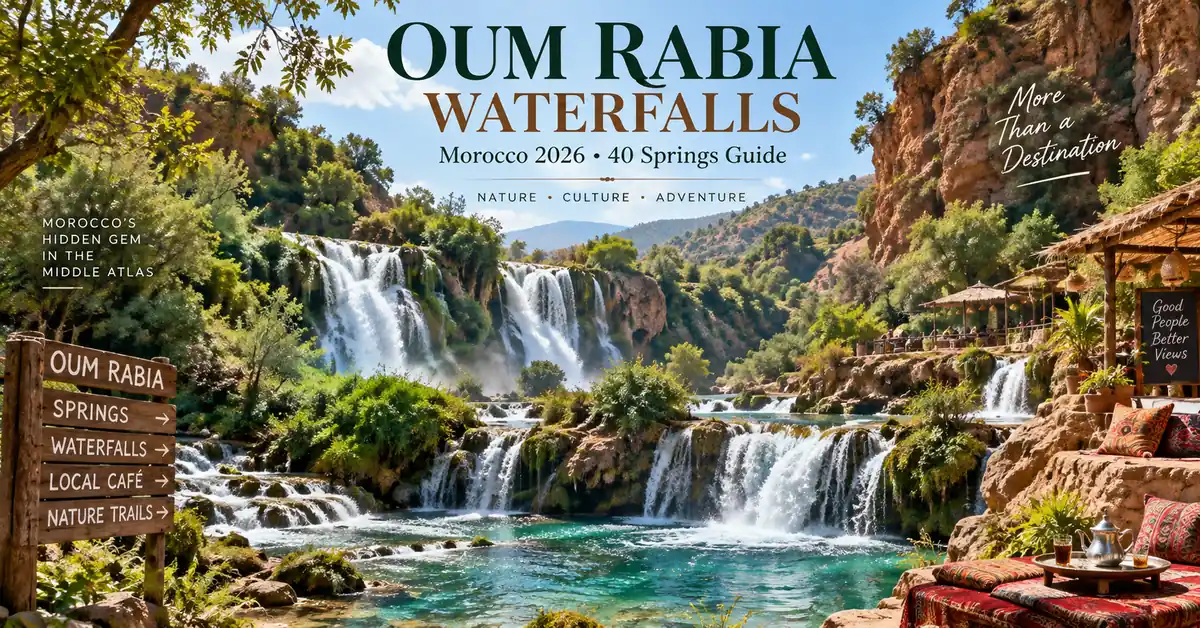
At Oum Rabia Waterfalls, water rushes from the limestone slopes of the Middle Atlas, streams beneath simple riverside shelters, and gathers into the headwaters of one of Morocco’s great rivers. Add cool mountain air, rocky cliffs, Amazigh villages, traditional tagines beside the water, and a road trip far removed from the country’s busiest tourist routes, and you have one of central Morocco’s most refreshing nature escapes.
Often associated with the poetic name “Forty Springs of Morocco,” the Sources of Oum Er Rbia form part of the headwaters of the Oum Er Rbia basin in the Middle Atlas. The wider region is known for springs, forests, lakes, and mountainous landscapes. (Visit Morocco)
If your 2026 Morocco itinerary includes Khénifra, the Middle Atlas, nature tourism, photography, or a Morocco road trip, Oum Rabia deserves a place on the route.
Oum Rabia Waterfalls at a Glance
| Travel Detail | What to Know |
|---|---|
| Location | Khénifra Province, Middle Atlas |
| Known For | Springs, cascades, cliffs and river scenery |
| Nickname | The Forty Springs |
| Best For | Nature, photography, food and slow travel |
| Closest Major Base | Khénifra |
| Best Season | Spring and early summer |
| Ideal Visit | Half day or full day |
| Travel Style | Road trips, couples, families and nature lovers |
1. What Makes Oum Rabia Waterfalls Special?
The experience begins with the water.
Rather than a single isolated waterfall, the area is defined by a collection of springs and cascades emerging from the limestone landscape before feeding the Oum Er Rbia system.
The name “Forty Springs” should be understood more as a traditional description of the abundance of springs than as a universally agreed exact count. Some local tourism sources describe 47 springs, including fresh and saline sources, while other references use “forty” poetically. (Kiwix Server)
That abundance of water creates an unusual environment in the Middle Atlas.
Rocky slopes rise around running water, vegetation follows the riverbanks, and small cafés and shelters sit close enough to the stream that the sound of rushing water becomes part of lunch.
1.1 The Source of the Oum Er Rbia
The Oum Er Rbia originates in the Middle Atlas and eventually reaches the Atlantic near Azemmour.
Its upper basin is fed by numerous springs, including the celebrated sources near Khénifra. Scientific research on the basin describes important karst and limestone formations that give rise to multiple springs, including some with higher salt concentrations. (ResearchGate)
1.2 Nature Meets Everyday Local Life
What makes Oum Rabia memorable is not only the geology.
This is not a polished resort built around a waterfall.
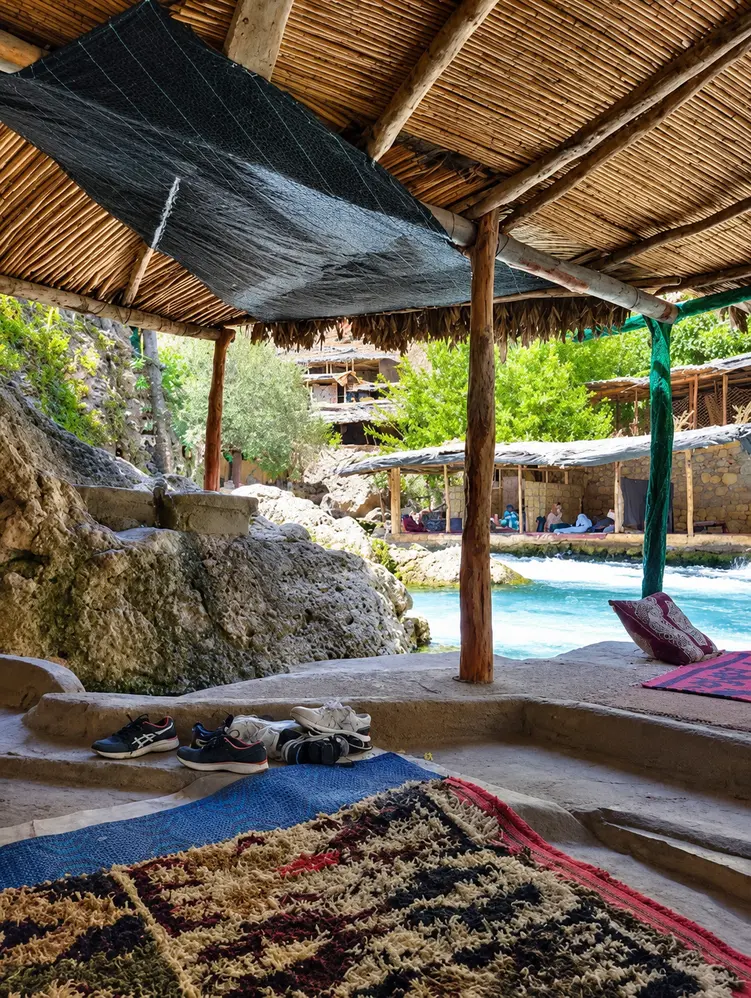
Local cafés, simple shelters, families, food, and surrounding communities are part of the experience. That gives the area a more grounded atmosphere than many heavily developed tourist attractions.
2. Where Are Oum Rabia Waterfalls in Morocco?
The Sources of Oum Er Rbia are located in Khénifra Province in the Middle Atlas, within the Béni Mellal Khénifra region.
The Moroccan National Tourist Office describes the Middle Atlas as a landscape of forests, lakes, volcanic plateaus, and important water basins, including the Oum Errabiaa basin. (Visit Morocco)
2.1 From Khénifra
Khénifra is the most practical base for reaching the springs.
Road routing data places Oum Rabia roughly 40 kilometres by road from Khénifra, with driving time around one hour depending on road and weather conditions. (DashDistance)
This makes the springs suitable for a day trip from the city.
2.2 From Ifrane
Oum Rabia can also be incorporated into a longer Middle Atlas itinerary.
Current route data places the road journey from Ifrane at roughly 89 kilometres, depending on the exact starting and ending point. (Rome2Rio)
Rather than treating it as a quick detour, combine it with other Middle Atlas stops and allow enough time for mountain roads.
2.3 From Marrakech or Fes
From Marrakech or Fes, Oum Rabia makes more sense as part of a longer road trip than as a rushed day excursion.
A wider route could include Ifrane, Azrou, Khénifra, Middle Atlas forests, mountain lakes, and Oum Rabia.
That gives you time to experience the region rather than simply drive in, take photographs, and leave.
3. Best Time to Visit Oum Rabia Waterfalls
The springs are associated with year round water, but the experience changes considerably with the seasons.
3.1 Spring
April to June is one of the most attractive periods.
The surrounding countryside is generally greener, temperatures are comfortable, and mountain scenery feels particularly fresh after the wetter months.
For photography and walking, spring is an excellent choice.
3.2 Summer
Summer brings warmer conditions and makes the cool river environment especially appealing.
It can also attract more local visitors.
If you want a quieter experience, arrive earlier in the day and consider visiting on a weekday.
3.3 Autumn
Autumn can work well for travelers building a broader Middle Atlas road trip.
Temperatures become more comfortable after summer, although the landscape may look drier than in spring.
3.4 Winter
Mountain weather can make winter travel less predictable.
Check road and weather conditions before traveling, particularly after periods of heavy rain, cold, or snow in the wider Middle Atlas.
4. Best Things to Do at Oum Rabia Waterfalls
This is not a destination that needs a packed schedule.
The appeal is slowing down.
4.1 Relax Beside the River
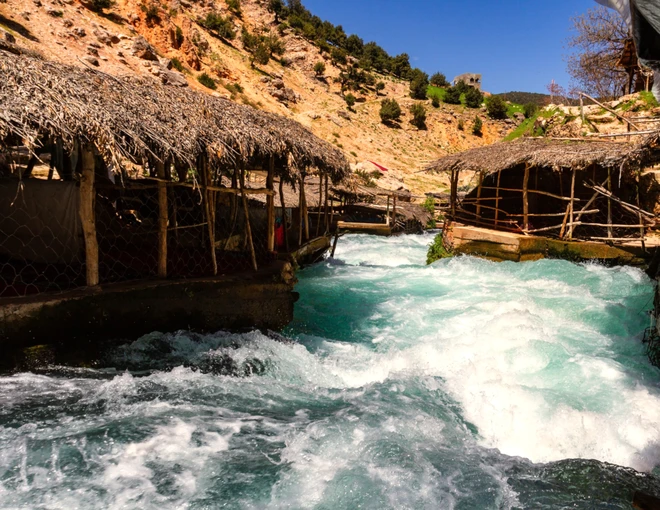
One of the simplest experiences is also one of the best.
Find a riverside seating area, order something to drink, and let the sound of the water replace traffic and notifications for a while.
Some simple shelters sit directly beside or above flowing sections of the river, creating one of the site’s most distinctive experiences.
4.2 Eat a Moroccan Tagine by the Water
Do not rush lunch.
Small local businesses serve traditional Moroccan dishes in an environment that would be difficult to recreate in a city restaurant.
A hot tagine beside cold mountain water is part of the Oum Rabia experience.
Supporting locally operated cafés also keeps more of your travel spending within the surrounding community.
4.3 Walk Along the River
Short walks allow you to find different perspectives of the springs, cascades, cliffs, and river.
Wear footwear with enough grip for uneven surfaces and stay on established paths where available.
4.4 Photograph the Middle Atlas Landscape
Oum Rabia works particularly well for:
• Water photography
• Landscapes
• Cliff formations
• Riversides
• Village scenes
• Food photography
• Slow travel content
Morning and late afternoon light can add more texture to the cliffs and flowing water.
4.5 Enjoy the Water Responsibly
The cold mountain water may look inviting, especially in summer.
Only enter water in places where it is locally considered safe and permitted. Conditions around springs, rocks, and moving water can differ from what is visible from the bank.
The experience is still worthwhile without swimming.
5. Oum Rabia Waterfalls for Photographers and Content Creators
If you create travel content, this is one of those destinations where the environment does most of the work.
Water gives you movement.
Rock provides texture.
Vegetation adds contrast.
Traditional riverside structures give the photographs a sense of place.
5.1 Photography Ideas
Try capturing:
• Water flowing between rocks
• Wide views showing cliffs and river together
• Traditional food beside the water
• Close details of the springs
• Paths and bridges
• Reflections in calmer pools
• Everyday life around riverside cafés
Avoid photographing local residents closely without permission.
For more techniques, see our Travel Photography Tips: 17 Easy Ways to Take Better Mobile Photos guide.
6. Practical Travel Tips for Oum Rabia
A little preparation makes a remote nature stop much easier.
6.1 What to Bring
Bring:
• Comfortable walking shoes
• Water
• Sun protection
• A light layer for cooler mountain air
• Camera or smartphone
• Power bank
• Some cash for local businesses
Mobile coverage and card payment availability should not be assumed in rural areas.
6.2 Bring Cash
Small family operated businesses may operate mainly with cash.
Carry Moroccan dirhams rather than relying entirely on cards or mobile payments.
6.3 Allow More Time Than You Think
Mountain roads can take longer than expected.
Do not build a tight schedule around the destination.
Part of the value of Oum Rabia is having enough time to sit beside the river rather than watching the clock.
6.4 Respect the Environment
Take rubbish with you.
Avoid damaging vegetation.
Do not disturb water sources.
Use existing paths and seating areas.
The appeal of Oum Rabia depends on keeping the landscape cleaner and quieter than major tourist centers.
7. Why Oum Rabia Is One of Morocco’s Most Interesting Nature Escapes
Morocco’s famous destinations often compete for attention.
Marrakech has its medina.
Merzouga has the dunes.
Chefchaouen has its blue streets.
Essaouira has the Atlantic.
Oum Rabia offers something quieter.
Here, the attraction is the relationship between water, mountain geography, and local life.
There are no giant monuments to tick off a list. You come to hear the river, eat beside it, explore the surrounding landscape, and experience a corner of the Middle Atlas that many international travelers never reach.
That is precisely the point.
For road trippers, photographers, slow travelers, couples, and digital nomads looking for a break from larger cities, Oum Rabia Waterfalls can become one of the most memorable unexpected stops in Morocco.
8. Frequently Asked Questions About Oum Rabia Waterfalls
8.1 Where Are Oum Rabia Waterfalls Located?
Oum Rabia Waterfalls and springs are located in Khénifra Province in Morocco’s Middle Atlas. The site is approximately 40 kilometres by road from Khénifra, making that city the most practical base for a visit. (DashDistance)
8.2 What Is the Best Time to Visit Oum Rabia Waterfalls?
Spring is an excellent time for greener scenery and comfortable temperatures. Early summer is also attractive if you want warmer weather while enjoying the cooler mountain environment. Visiting early in the day or on a weekday can provide a quieter experience.
8.3 Why Is Oum Rabia Called the Forty Springs?
The headwaters are fed by numerous groundwater springs, which led to the traditional name “The Forty Springs.” Some sources describe the name as poetic rather than a literal count, while local tourism references sometimes cite 47 individual springs. (Kiwix Server)
9. Useful Resources for Exploring the Middle Atlas
Continue Exploring on Trending Morocco
• Ultimate Morocco Travel Guide 2026 for itineraries, transport, food, culture, and practical planning
• Jebel Toubkal National Park: 9 Things to Know Before You Go for another mountain nature experience
https://trendingmorocco.com/jebel-toubkal-national-park/
• Hiking in the Atlas Mountains for trails and mountain travel inspiration
• Morocco Road Trip 2026 for connecting the Middle Atlas with the rest of the country
• Travel Photography Tips: 17 Easy Ways to Take Better Mobile Photos for photographing waterfalls, mountains, and landscapes
External Resources
• Moroccan National Tourist Office for official information about the geography and landscapes of the Middle Atlas. Explore the Middle Atlas with Visit Morocco
• Routard provides additional visitor information about the Sources of Oum Er Rbia and their location near Khénifra. Oum Er Rbia Sources travel information
10. Final Thoughts: Is Oum Rabia Worth Visiting?
Yes, especially if your Morocco itinerary extends beyond the country’s most famous cities.
Oum Rabia Waterfalls offer a quieter type of travel experience: mountain air, running water, simple food, rocky landscapes, and local life unfolding beside one of Morocco’s important river systems.
Come for the famous Forty Springs, but do not rush away after seeing the water.
Have lunch.
Walk beside the river.
Take photographs.
Listen.
The Middle Atlas rewards travelers who give it time.